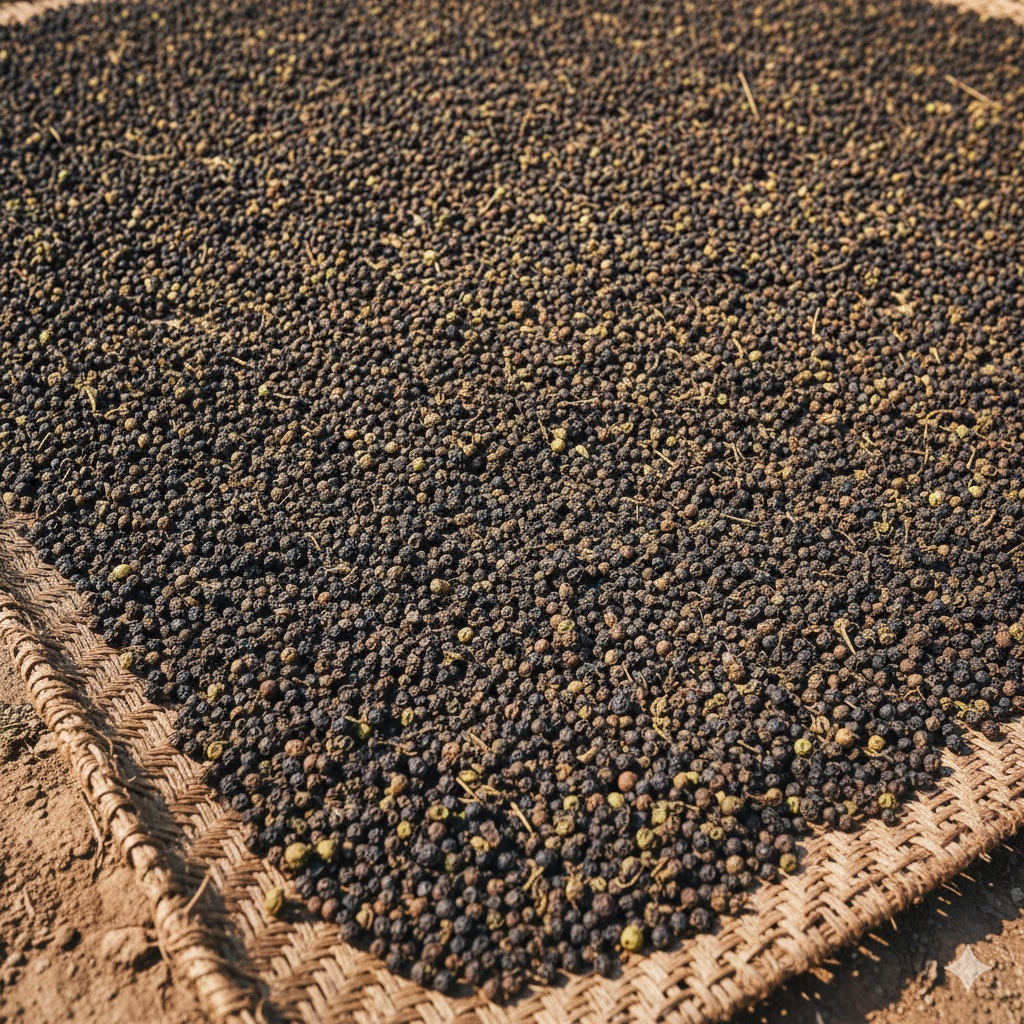
The drying yard · day three · turned by hand at noon
A pepper berry is not black when it is picked. The colour, the wrinkle, and the bite are all made after the harvest — in five unhurried steps, every one of them by hand, on the estate.
The berries grow in long spikes that ripen unevenly, green to red. We pick when most of a spike has just turned — the single window that yields the strongest black pepper. Too early is harsh; too late and the berries soften toward white pepper.
A brief dip in hot water — under a minute. It ruptures the cell walls and triggers the enzymes that turn the skin black as it dries. This one step is the difference between pepper that wrinkles a deep, even black and pepper that dries a dull, patchy grey.
Spread thin on woven mats for three to five days, depending on the monsoon's mood. The skin shrinks and wrinkles tight around the seed — the reticulated ridges that mark a real peppercorn. We turn it by hand at noon. No kiln, no gas, no shortcut — only the Idukki sun and the patience to wait on it.
Sorted by density, not by eye. The dried pepper is run over a graded sieve and through a winnow; the heaviest berries — bold grade, five hundred and fifty grams to the litre — sink and stay. The light, hollow ones float off and never carry our lot number.
What is left is weighed, dated, and given a number tied to the week and the slope it came from. It is packed whole — never pre-ground, because pepper loses its oils within minutes of grinding. The number goes on the pouch. The pouch goes to you. Nothing in between is pooled.